
Kosher Style Fermented Cucumbers - Half Sours
- Mustards, Vinegars & Ferments
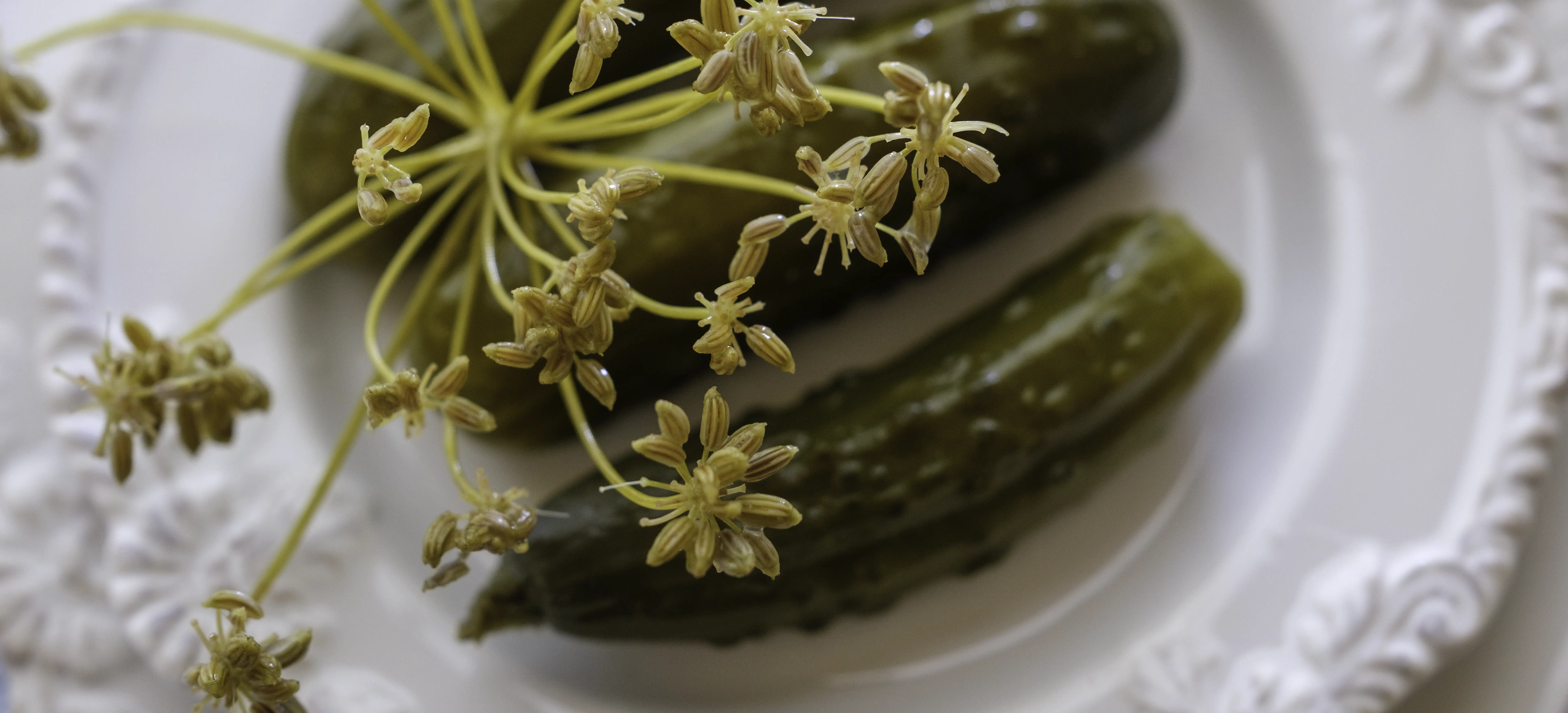
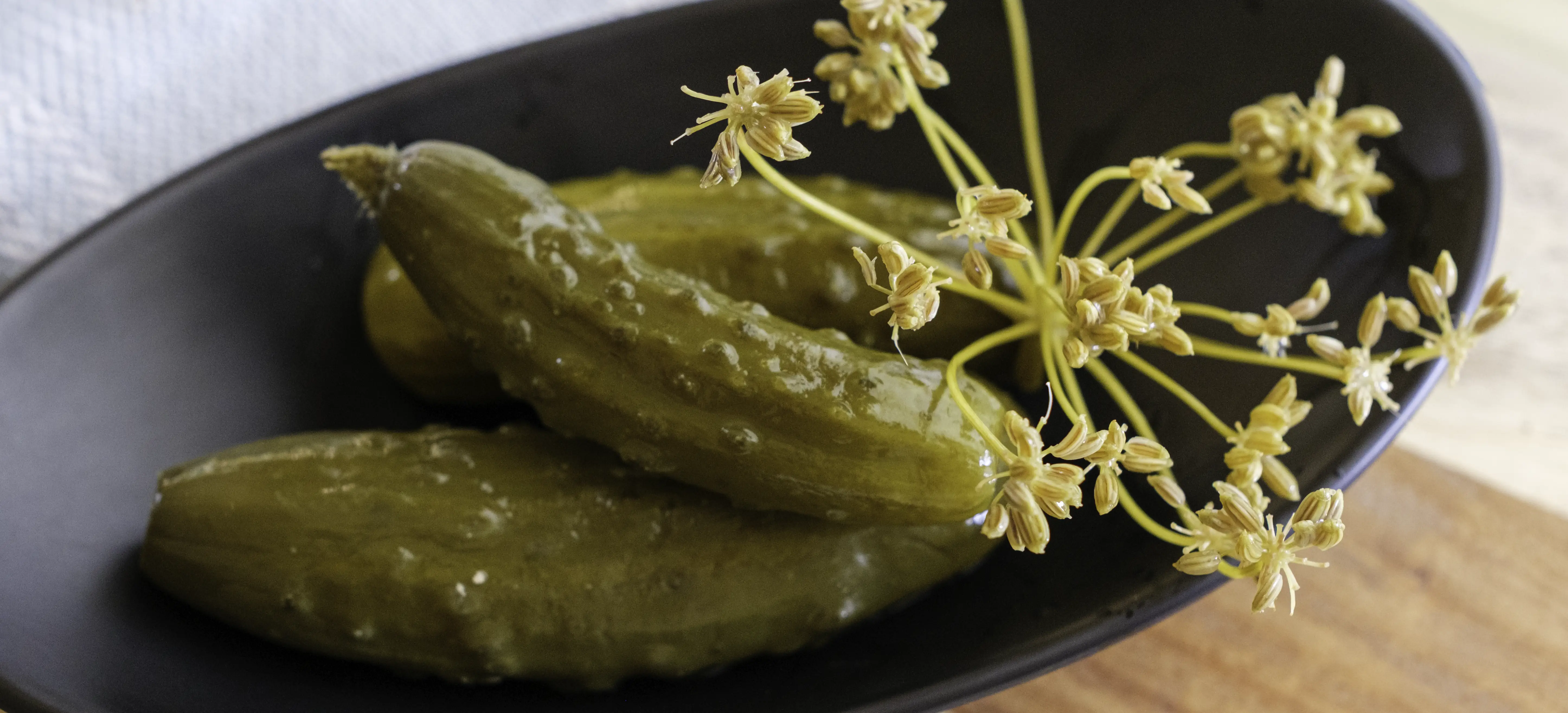
This quick half-sour method of making these delicious crunchy, slightly sour but fresh-tasting cucumbers is so easy to make. I love how the dill and garlic flavour jumps right out of the jar every time it’s opened. I close my eyes and breathe in its wholesome goodness. The live culture from the natural lactic-acid fermentation is full of digestive stimulants that boosts my gut microbiome making me feel revitalised.
This is a must do recipe for all kitchen gardeners, cooks and those seeking to maximise the nutritional content from their kitchen garden. Your jar of goodness and wellbeing will be ready in 7-10 days.
They are called half sours as they are quickly fermented in a low-salt brine. This hastens the fermentation so the pickles do not get an intense flavour regardless of how long they remain in, and, not because they have been taken from it prematurely.
- Preparation Time:
- 30 minutes + 7 days fermentation
- Quantity:
- 2 x 600 ml jars
PREPARATION
Sterilise glass jars and lids with a protective lining. Have the jars and lids dry, cold, and ready for the bottling stage. Here’s my quick reference guide to sterilising containers.
INGREDIENTS
- 3.5 litres
- Water
- 140g
- Cooking salt
- 1 kg
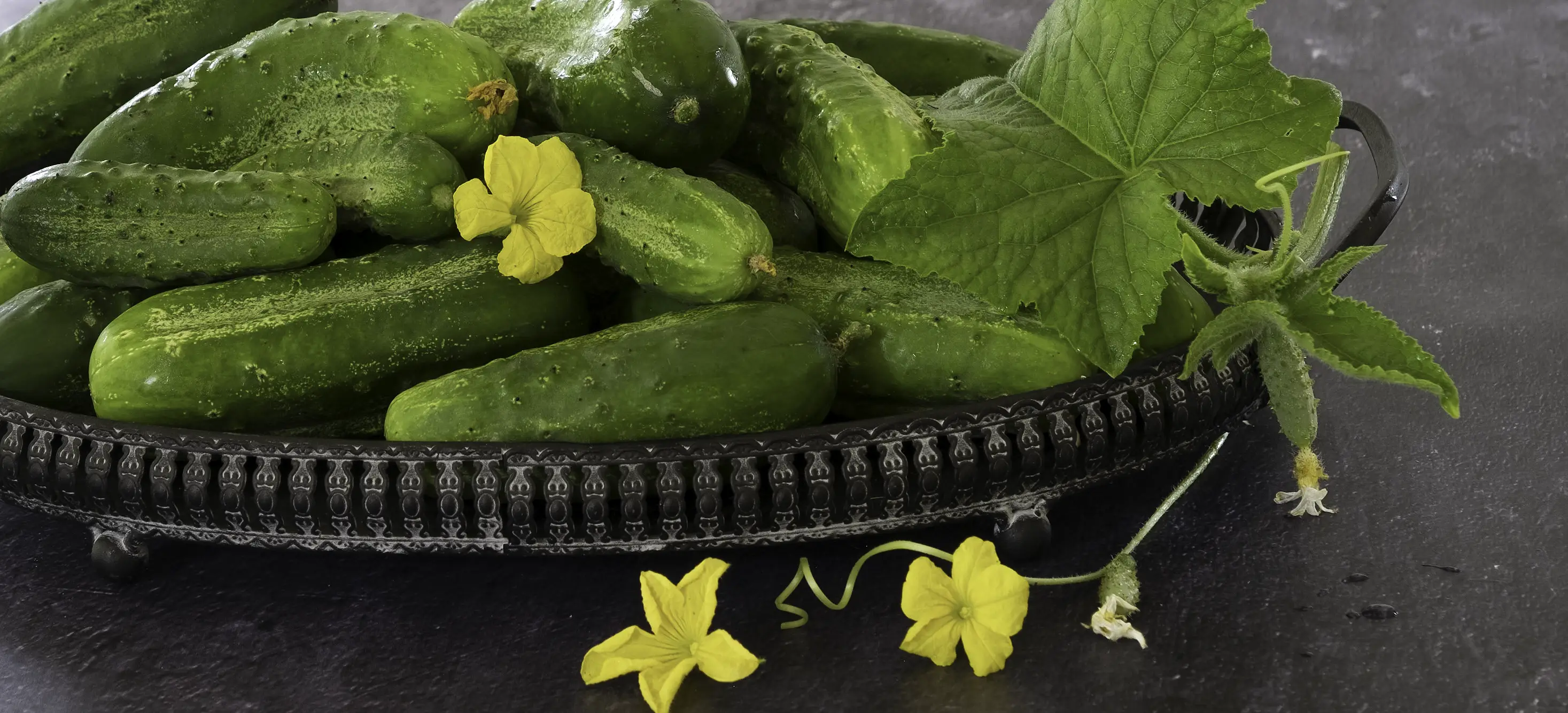
- Pickling cucumbers
- 8
- Garlic cloves, medium-large
- 1 tablespoon
- Allspice berries, whole
- 1 teaspoon
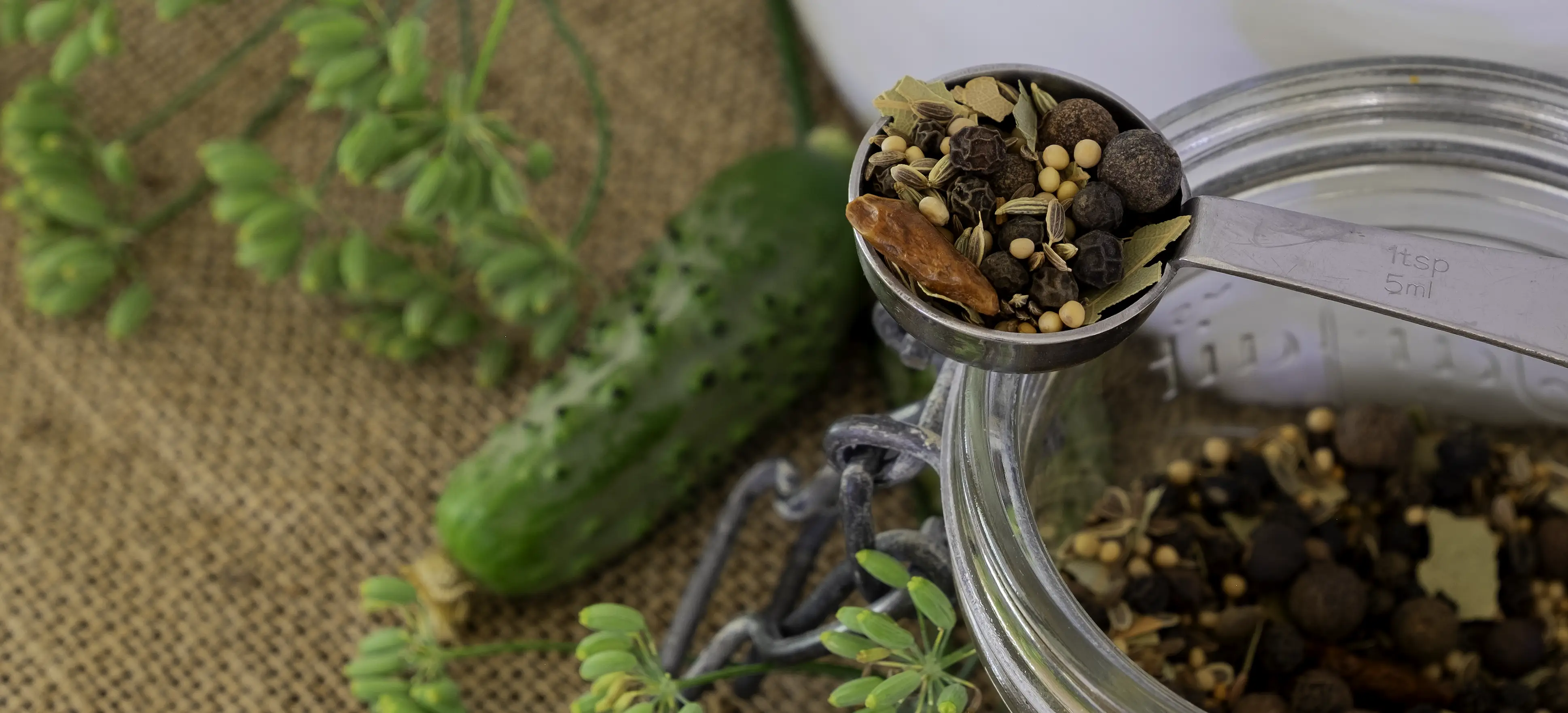
- Black peppercorns
- 2 tablespoons
- Coriander seeds
- 1
- Bay leaf
- 6
- Dill seed heads
- 2
- Jalapenos, split lengthwise, optional
METHOD
Add the water and salt in a saucepan, place over gentle heat and stir until the salt has completely dissolved. Remove from the heat and allow to cool.
Remove the blossom end of the cucumbers. Gently wash to remove any garden debris and spiky hairs on the skin. Dry lightly with paper towel or a clean dry tea towel.
Peel the garlic and slice into long slivers.
Wash the bay leaf if picked from the garden. If using a dried bay leaf washing is not required.
Using a dry, sterilised and cold fermenting jar or preserving crock, layer the cucumbers from the smallest to the largest ones, with the dill seed heads, jalapenos (if using), garlic, peppercorns, coriander seeds and bay leaf. Refer to the Notes Section below: Fermentation Containers for an explanation on the various types of containers that can be used.
Cover the cucumbers with the cooled brine. Then weigh the cucumbers down with the fermenting crock weights, an inverted plate, or a brine-filled plastic bag. Ensure the cucumbers remain submerged with a covering of approximately 2 cm (3/4 inch) of brine. Refer to the Notes Section below: Weighting the Cucumbers for further information, if required.
Seal the container, in accordance with the type of container used, allow to ferment at room temperature and out of direct sunlight. Within 3 days tiny bubbles will appear on the surface, indicating the fermentation has begun. The cucumbers will be ready within a week.
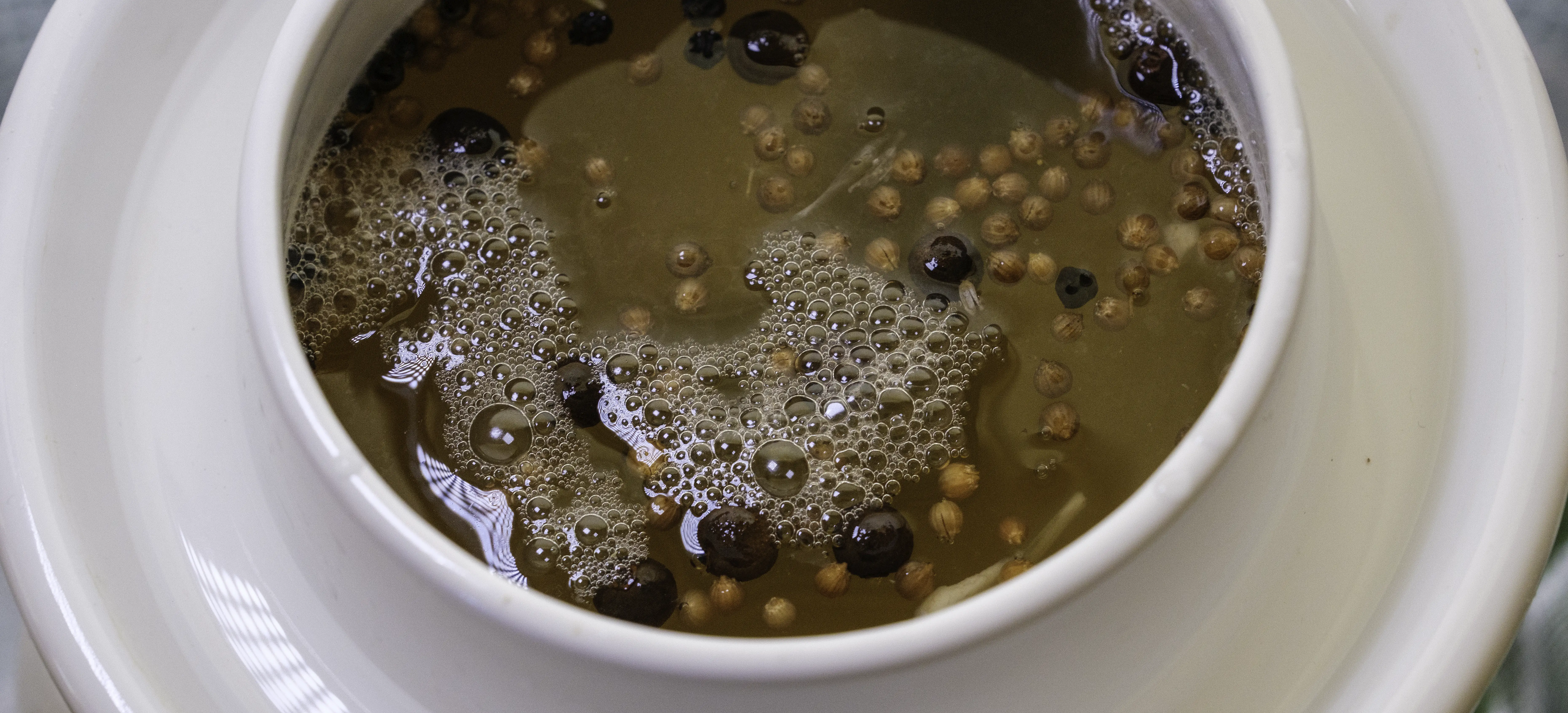
Taste when the tiny bubbles have finished rising and skim off any scum that accumulates on the top of the jar. The fermentation time will depend on the ambient room temperature. Check regularly to make sure the cucumbers remain submerged and taste until it reaches your preferred level of ‘soured flavour.’ The cucumbers will have changed colour to a dull olive green.
When ready, transfer the cucumbers and aromatics to dry, room temperature, sterilised jars. Completely cover with the brine solution and seal immediately. Store in the fridge. Ensure the cucumbers remain submerged.
Once opened, label with their best use by date for your easy reference. They are best eaten within 3-4 weeks.
NOTES
Unless you have access to copious quantities of small pickling cucumbers, it’s likely you will be preserving in small batches. If you are growing your own, harvest the cucumbers in the cool of the morning and place in the crisper compartment of your fridge. Process within 2-3 days. Any longer and they will begin to dehydrate, and the final product will be compromised.
- Pickling Salt
- Use good quality cooking salt, not coloured mineral or coloured sea salt as they can change the colour, clarity, and taste . Superior quality cooking and table salts are readily available on the web.
- Table salt can contain stabilisers and anti-caking agents and often iodide which forms a whitish haze and sediment. These additives, and in particular iodine, can affect the appearance during the maturation and storage period and taste. The ingestion of a cocktail of anti-caking chemicals such as calcium silicate, sodium silicoaluminate, tricalcium phosphate, magnesium carbonate, silicon dioxide and yellow prussate of soda, is also unnecessary.
- Lite Salt may be used in quick pickle recipes; however, it may result in a slightly different taste than expected.
- Caution: Use of reduced-sodium salt in fermented pickle recipes is not recommended. It will create a favourable environment for the growth of harmful bacteria whereas normal salt creates a favourable environment for the growth of beneficial ones. Also, the correct concentration of salt is vital to texture and food safety. Use the quantity specified in the recipe.
- Equipment Hygiene
- When fermenting, personal and equipment hygiene is important to prevent cross-contamination. Thoroughly wash your hands and all equipment in hot soapy water and dry prior to use.
- Sterilise storage jars and lids and cover with a clean dry tea towel until required.
- Chlorinated Water
- Chlorine is often added to water supplies specifically to kill potentially harmful microorganisms. Adding heavily chlorinated water slows, inhibits, or can prevent fermentation.
- Chlorine can be removed by, (1) passing the water through a filter, (2) boiling the water, or (3) placing water in a large open pot for 1-2 days to allow the chlorine to evaporate.
- Fermentation Containers
- Learning to ferment does not require an expensive outlay on specialist fermenting equipment. Different types and shaped vessels offer different functional benefits. Wide mouth jars with or without sealable lids or with lids which have airlocks attached, or ceramic crocks are the most popular options.
- Regardless of the type of vessels used, the cucumbers still must be weighed down and remain completely covered with brine during the fermentation process.
- Types of Containers
- Glass Jars
- Jars with sealable lids
- Jars with a wide opening are better as it’s easier to get the cucumbers in/out. This cucumber fermentation, unlike kombucha or vinegar ferments, does not require oxygen or microbes from the air and can be fermented in a sealed container.
- A by-product from the fermentation, CO₂ gas, will build up and create pressure in the jar. To prevent the jar from exploding, it is important to release the pressure, by removing the lid, so the gas can escape, and then reseal it. This process is known as “burping.” Check and burp these jars every couple of days.
- The cucumbers must still be weighed down during the fermentation stage.
- Jars fitted with an airlock
- Jars with lids with attached airlocks are inexpensive to purchase from preserving outlets and speciality homeware stores. After packing and weighting the cucumbers and brine solution to 2 cm (3/4 inch) from the top of the jar, attach the airlock lids.
- Fill the airlock with water to the prescribed level and proceed to the fermentation stage. Different sizes and configurations are available to suit a variety of budgets and are easy to search on the internet.
- Some popular brands are Fowlers Vacola, Kilner, Masons and Le Parfait.
- Jars fitted with an airlock do not need to be 'burped'. The airlock design allows the CO₂ gas to escape and prevents air from entering the jar.
- Fermenting Crock
- Ceramic and pottery crocks are ideal for larger scale production.
- The straight sided cylindrical shape provides a large surface which makes packing, removing, and weighting the ferment easy.
- Some are designed with a moat around the top of the mouth. This is filled with water and a fitted top sits within the moat. This prevents oxygen from entering, while a small hole sitting below the moats water level allows CO₂ gas to escape.
- Crock kits also come with stoneware weights made specifically to fit inside.
- Metal
- Fermenting in metallic containers should be avoided. The natural acids from the fermentation and the salt can cause the metal to corrode which will contaminate your batch.
- Stainless Steel
- Industrial stainless-steel containers can be used but not household stainless-steel grade containers as only a thin stainless coating is applied to a metal base. Corrosion will occur anywhere the stainless steel has been scratch.
- Enamel
- Enamel pots can be used as the enamel protects the metal from corrosion.
- Check carefully to ensure the enamel is not cracked or pitted.
- Glass Jars
- Weighting the Cucumbers
- The cucumbers must remain submerged during the fermentation process. Ferments which are not completely covered can develop a mould or an “off taste.” Professional fermentation crockpots come with ceramic weights. Alternatively, the plastic bag method also works effectively
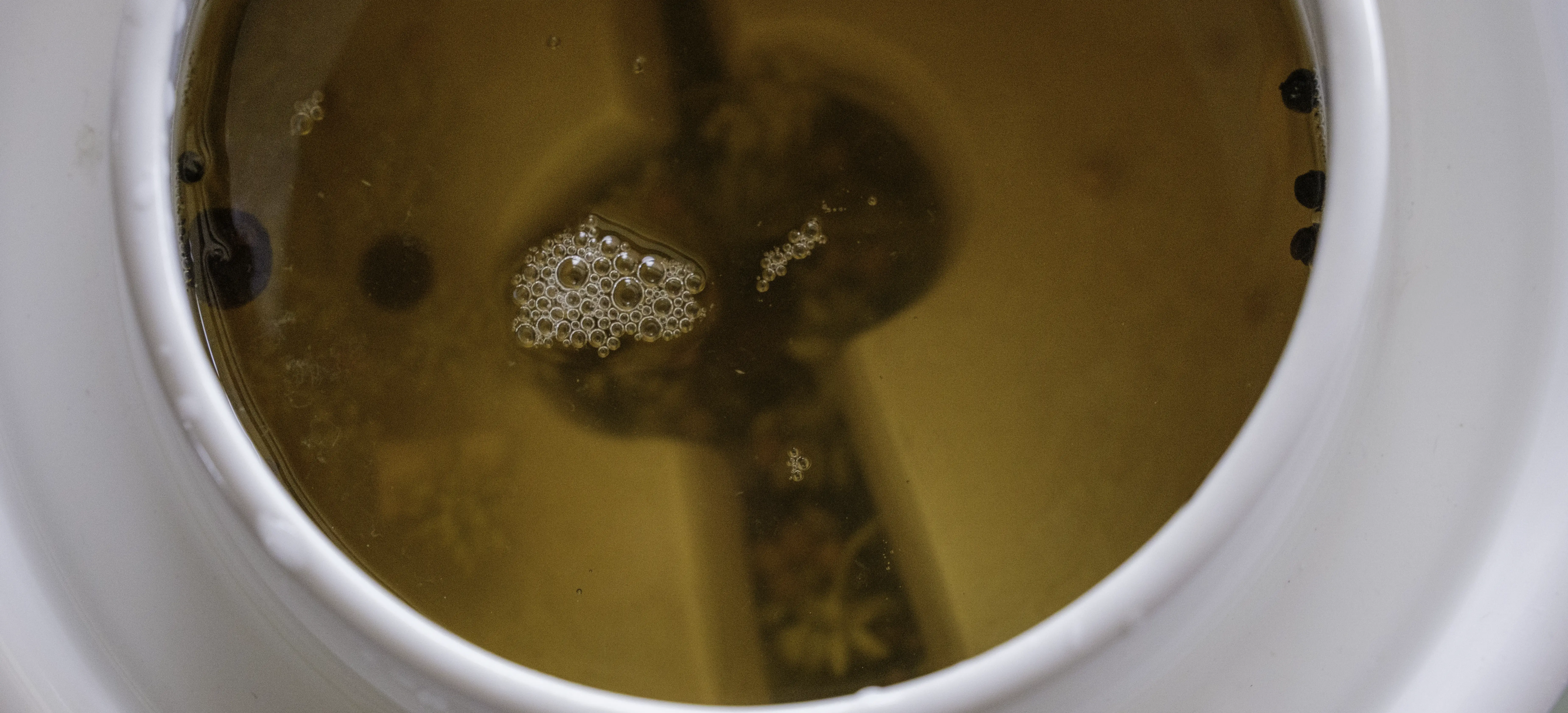 Ceramic weight used to keep cucumbers submerged
Plastic Bag Method
- Place a food grade plastic bag inside another to make a double bag. Fill with the same brine solution used in the recipe and lay over the cucumbers and brine mixture.
- Twist and tie the bag to form a secure seal. The bag will function as a weighted cushion so it must be heavy enough to ensure the cucumbers always remain submerged. Adjust the weight of the brine bag, as necessary.
- A brine solution is used so that in the event the bag breaks and spills into the fermentation brine, it will not be diluted.
- Ceramic Weights Method
- If using a fermenting crock, after the cucumbers are packed in, weigh them down with the weights supplied with the kit. Cover with the supplied lid.
- Brining Solution Strength
- Brine strength refers to the weight of salt as a percentage of the solution. It’s important, as it affects the speed of the fermentation process, the degree of pickle sourness and how long the pickles will keep.
- When making Half Sours, for instance, 140g is used in 3.5-4.5 litre of water. While they will be ready to eat within a week, they are not suitable for hot water vacuum sealing /canning as they are not salty enough to prevent the growth of harmful microorganisms.
- For Full Sour pickles use a 5% brine. The fermentation time will be longer-typically 2-4 weeks and they are suitable for hot water vacuum sealing/canning.
- For a salty full-flavoured pickle, use a 7-8% brine. This produces a slower fermentation which results in a strong flavour.
- Some recipes call for a solution that’s salty ‘enough to float an egg.” This is a 10% brine and produces very salty pickles that have a longer keeping time. Sometimes they are so salty, the pickles may need to be soaked in fresh water, so they are edible.
- Fermentation Temperature
- Unless otherwise specifically mentioned in a recipe, most fermentation temperatures are acceptable between 13-27 degrees C (55-80 degrees F). The lower the temperature, the slower the ferment.
- Temperatures over 27 degrees C results in a fast fermentation and may result in a soft pickle. During hot weather, it’s preferrable to use a stoneware crock that’s sitting on a ceramic tile.
- For any extended hot spells, consider fermenting in the fridge until the heat wave passes. The fermentation may be delayed, but the ferment rate will increase once it returns to a warmer environment.
- Why Can the Cucumbers Go Mushy: What’s the Remedy
- Cucumbers have a very high-water content and can decompose quickly because of its pectin-digesting enzymes.
- To keep the cucumbers crunchy: grape, oak, cherry, horseradish leaves, or other non-toxic tannin-rich plant materials can be used in the fermenting process. The leaves are layered through the cucumbers, or a handful can be placed on the bottom and top of them. At the bottom, the leaves help to keep the cucumbers slightly lifted out of the sediment which can cause softening, while the top leaves, help to keep the cucumbers submerged.
- Harold Magee, renowned American food science writer, known for explaining the chemistry, biology, and history behind cooking, suggests that unrefined sea salt improves crispness due to its calcium and magnesium impurities which help to cross-link and reinforce cell-wall pectin’s.
- What to do with Left-Over Pickle Juice
- Drink straight or diluted with water (1) after strenuous exercise or to rapidly reduce muscle cramps. Excellent for replacing lost sodium/potassium and electrolytes (2) as a hangover cure, (3) as an addition to cocktails/mocktail like Bloody Mary, Gin, or Vodka & Tonic, (4) Apple & Celery juice. I’m sure you’ll find some of your own favourites. Not recommended for people who have to modify their salt intake.
- Use as a flavouring. Adds a slightly salty and sour taste, so only add more salt after you have tasted your dish. Excellent in rich and or creamy dishes such as creamy potato or egg-based salads, coleslaw and with tuna or salmon dishes and borscht. (German beetroot soup)
- Re-use to make another batch of pickles by adding a small amount to the new brine solution. It will accelerate the fermentation process. This is called ‘backslopping” a similar technique is used when making kombucha. A small amount of the mother is added to the new tea solution.
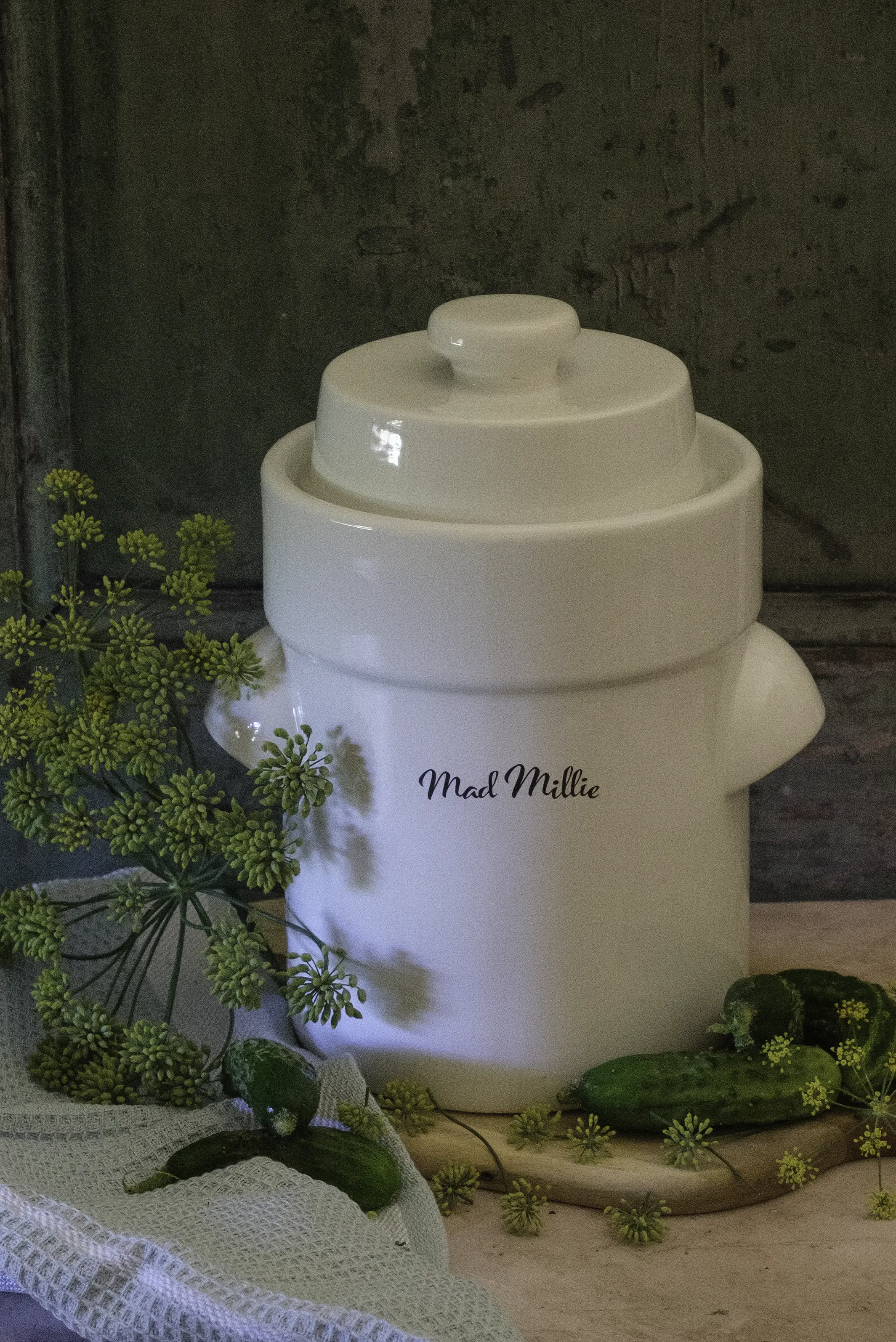
Enjoy your next batch of Half Sours