
Tomato and Cucumber Burger Relish
- Pickles, Chutney, Relish & Sauces
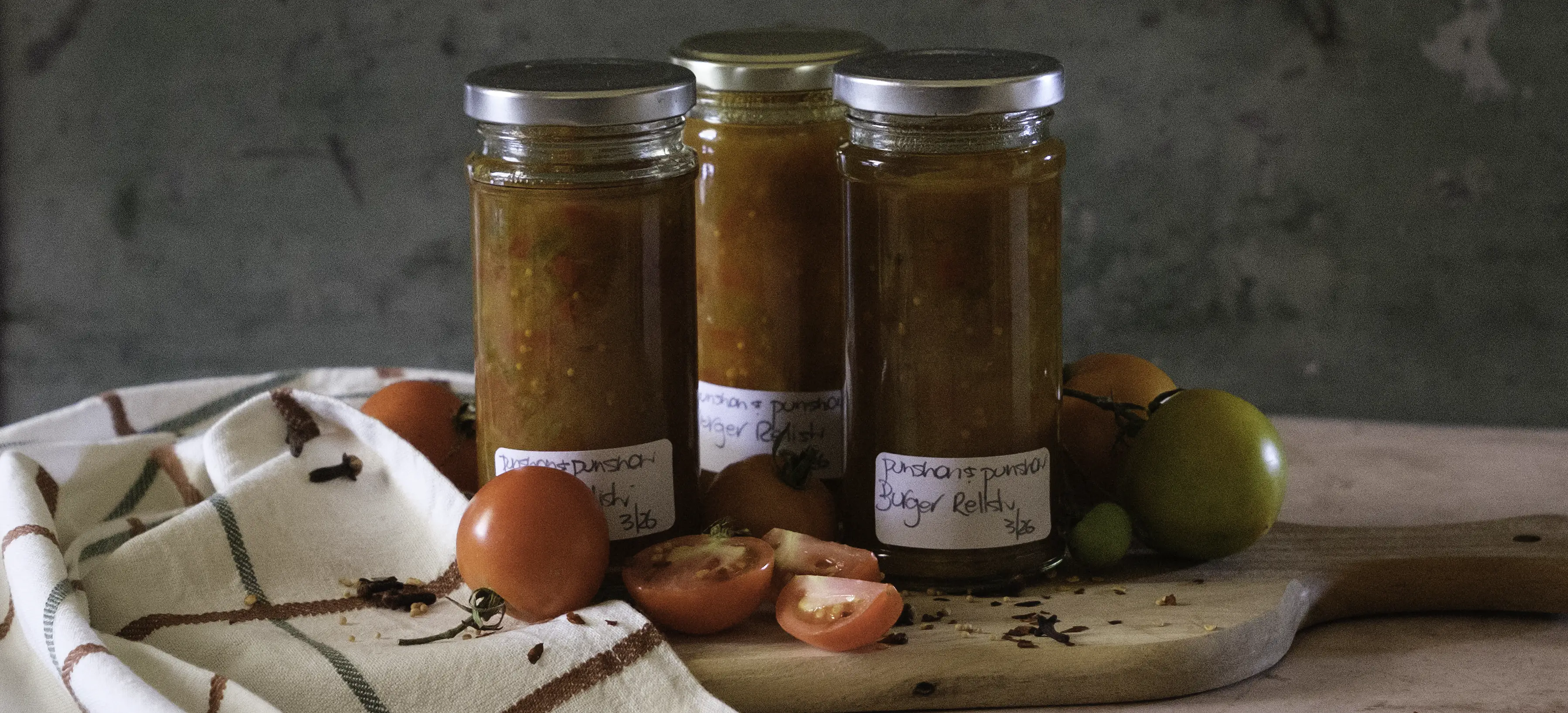
This light fruity relish, full of crisp cucumbers, celery and capsicums in a tomato base, lifts burgers of all descriptions to the next level. Don’t just think the ubiquitous beef variety, it could be chicken, fish, turkey, vegetarian style or even a shroom or tofu burger. This time of year, when the tomato, cucumber, capsicum and celery crops are just building in the mild Autumn weather, this recipe provides an alternative to the standard tomato chutney, tomato sauce or tomato kasundi. Another great recipe for the pantry or for gifting to family and friends or to donate to the local community fund raising stall.
- Preparation Time:
- 40 minutes + overnight soaking
- Cooking Time:
- 1 hour
- Quantity:
- 10 x 300ml jars
PREPARATION
Sterilise glass jars and lids with a protective lining. Have the jars and lids dry, hot and ready for the bottling stage. Here’s my quick reference guide tosterilising containers.
INGREDIENTS
- 625g
- Pickling cucumbers, peeled, seeded & finely chopped
- 165g
- Celery stalks, finely chopped
- 265g
- Red capsicum, seeded & finely chopped
- 265g
- Green capsicum, seeded & finely chopped
- 225g
- Brown onion, peeled & finely chopped
- 3
- Garlic cloves, peeled & finely chopped
- 80g
- Salt, preserving
- 950 ml
- Apple cider vinegar
- 2
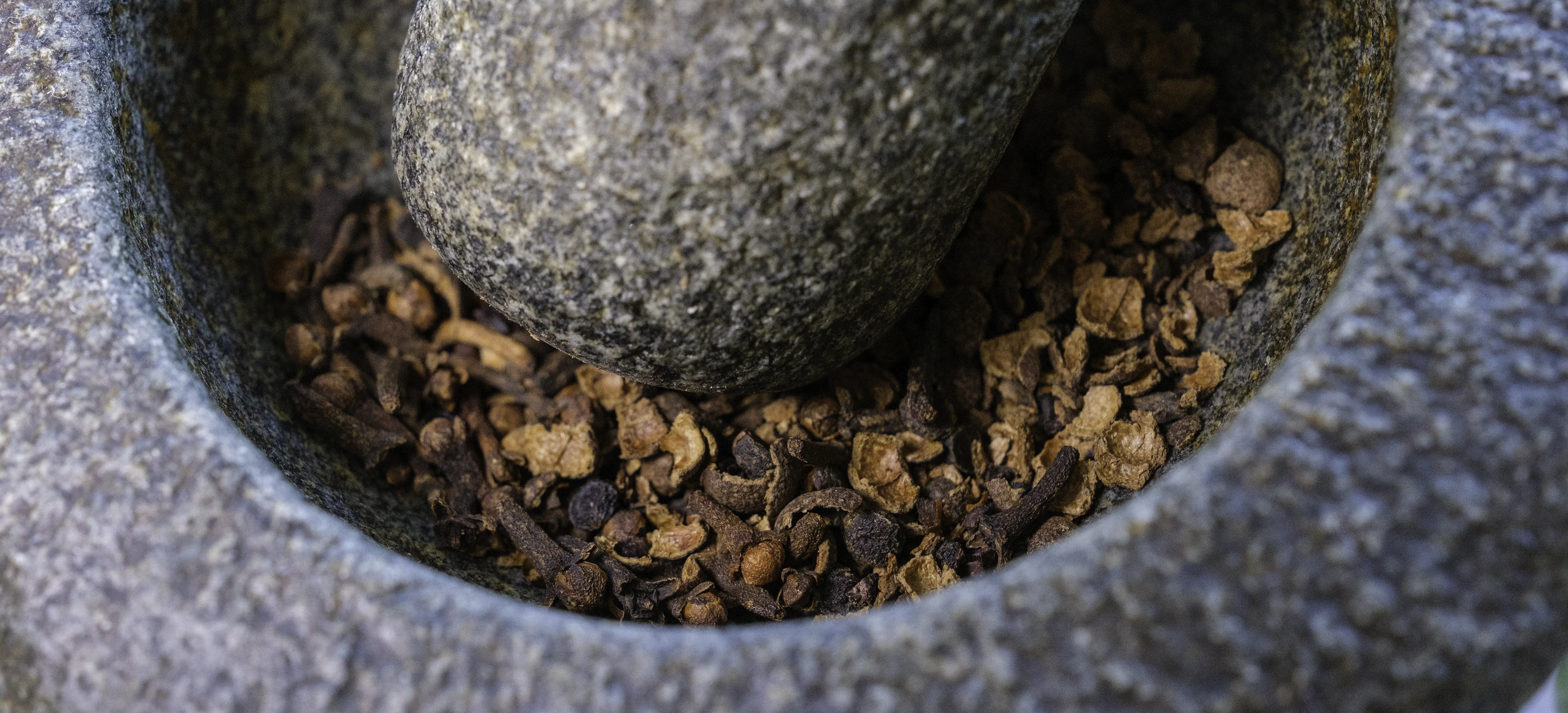
- Cinnamon quills, 2-3 cm each
- 2 teaspoons
- Cloves, whole
- 2 teaspoons
- Allspice berries (pimento), whole
- 625g
- Tomatoes, peeled, seeded, coarsely chopped
- 4 teaspoons
- Yellow mustard seeds
- 4 teaspoons
- Turmeric powder
- 1/4 teaspoon
- Chilli flakes, dried
- 410g
- Sugar, white
METHOD
Place the diced cucumbers, red and green capsicum and garlic in a large mixing bowl. Cover with water and add the salt. Stir to dissolve. Cover with a clean tea towel and allow to soak overnight covered in the fridge.
The next day, using a colander, drain the liquid from the salted vegetables. Cover with cold water again and allow to soak for a further 1hour.
Drain again before using in the next stage. Press the vegetables lightly, without bruising or mushing them, to extract excess liquid.
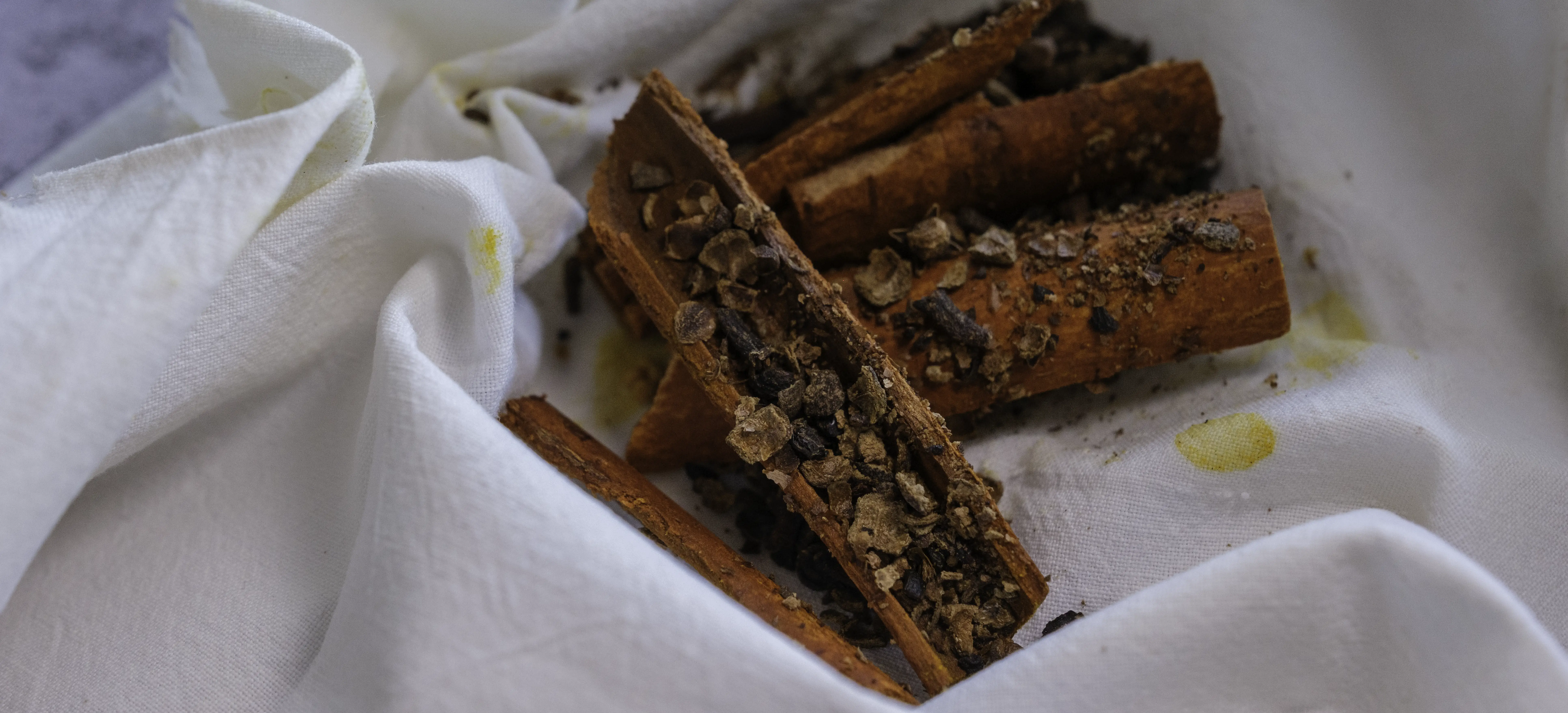
Place the cinnamon sticks, whole cloves and allspice berries into a spice bag and tie up. Refer to the Notes Section below: How to Make a Spice Bag. Place in a preserving pan or large heavy-bottom stainless-steel saucepan and add the vinegar. Bring to the boil, then reduce to a simmer, and cook uncovered for 15 minutes, to extract the flavour from the spices.
Add the tomatoes, mustard seeds, turmeric and chilli flakes. Bring to the boil, then turn the heat to a simmer and cook, partially covered this time, for approximately 30 minutes until the tomatoes resemble a puree consistency.
Add the sugar and stir until dissolved.
Add the drained vegetables, quickly bring to the boil and cook over high heat for approximately 5 minutes. The mixture must boil during this stage. Do not overcook at this point. The vegetables should be cooked but retain some crunchiness.
Remove from the heat and place on a heat-resistant board. Remove the spice bag.
Using a funnel, ladle the hot relish into hot jars immediately. Leave 2.5 ml (1 inch) headspace in the jar. Seal immediately with hot lids. This is the HHH sealing method. Refer to the Notes Section below: The HHH Method for further information.
Allow to cool and wipe the jars down to remove any spills during the bottling stage.
Label and store in a cool dark place in the kitchen or pantry. Allow to mature for at least 3 weeks before eating.
Once opened, store in the fridge and use within 3 months.
NOTES
- Cucumbers have a high-water content. Excess water is removed by soaking the cucumbers in a brine solution overnight. However, to remove the excess salt, the mixture must be drained, thoroughly washed or soaked for 1 hour in clean fresh water, then drained again. Ensure the mixture is well drained to remove any excess water. If this step is eliminated it can result in a watery relish. The red and green capsicum add a colour contrast and flavour to the relish and the celery adds additional crunch.
- Good quality jars
- Good quality jars should be used in all preserving, particularly when they are processed in a hot water bath. Thin jars often cannot withstand the temperatures and may crack either in the bath or on and or after removal.
- Avoid the disappointment and invest in some good jars from a homewares or preserves outlet.
- Select jars that have non-reactive lids as the vinegar solution can cause the lids to rust over time.
- Use good quality pickling salt.
- Many commercial salt brands contain stabilisers and anti-caking agents and often iodine which forms a whitish haze and sediment. These additives and in particular iodine can affect the appearance and taste of pickles and preserves during the maturation and storage period.
- The ingestion of a cocktail of anti-caking chemicals such as calcium silicate, sodium silicoaluminate, tricalcium phosphate, magnesium carbonate, silicon dioxide and yellow prussate of soda, is also unnecessary.
- Read the label before buying and look for salt that is free from any artificial additives. My favourite salt is Olsson Cooking Salt.
- No commercial benefit is received from Olsson Salt. Lite Salt may be used in quick pickle recipes; however, it may result in a slightly different taste than expected .The natural calcium and magnesium impurities of unrefined sea salt helps to cross link and reinforce the cell wall pectin’s, creating a crisp pickle.
- The HHH method
- The HHH method of HOT dry jars, HOT dry lids and HOT preserve creates a vacuum seal as it cools. The “popping” sound, often heard in the kitchen, signals a successfully vacuum sealed jar.
- This method of sealing is preferred as there is reduced risk of contamination prior to and after sealing.
- Cooking times
- Cooking times are an approximation only.
- They are provided as a guideline as cooking times are influenced by the type of pot and its diameter and height, speed of cooking and fruit ripeness, size, and moisture level.
- To make a spice bag
- Drape a square of muslin or calico over a basin. Place the spices and/or herbs outlined in the recipe mixture into the cloth. Gather up the corners and make a bag by tying it up with kitchen twine approximately 2 cm above the spices.
- Always allow room between the tie point and spice mixture so the water can bubble through the bag easily. This helps to extract as much flavour as possible from the contents.
- Discard the spices, unless otherwise specified in the recipe once the bag has been removed from the preserving pan. Wash, dry, and keep the cloth for the next batch.
- My tea towel draw has a range of different sized cloths that are on hand for preserving.
- Alternatively, when using smaller quantities of spices, use a large sturdy sealable stainless steel tea infuser, that can be easily cleaned and withstand long slow simmering.
- Is it a chutney or a relish?
- Chutney is made from chopped fruits and vegetables that are cooked slowly with vinegar and a sweetener – usually sugar and spices to make a thick, savoury jam-like mixture. Chutneys are best allowed to mature for at least 2 months in a cool dark place before eating.
- Relishes are similar; however, they are cooked for a shorter period. This reduced cooking time produces a lighter, crisper and fresher preserve. The fruits and vegetables are usually finely diced so they cook more quickly, hence retaining their crisp texture and a white wine vinegar or apple cider vinegar is used which also contributes to a lighter fresher taste. Typically relishes also contain less vinegar and sugar which means they can’t be kept as long.
- Kitchen twine
- Kitchen twine is also known as butcher’s or cooking twine. It’s made from either a 100% cotton, linen or a cotton/polyester blend. The best and safest to use is the 100% natural cotton as it can withstand long cooking, does not impart flavour into cooked food and is food safe.
- Do not use synthetic twine made from either polypropylene or polyester or a blend of these with a natural twine as they aren’t oven safe. If you purchase a natural kitchen twine it will be safe for all your cooking needs.
- It is sold in kitchen equipment, commercial cooking stores and some Hardware stores.
- Allspice (Pimenta diocia)
- Also known as Jamaican pepper, clove pepper, pimento. Allspice come from an evergreen tree in the myrtle family. Twigs bearing the berries are picked in summer when the berries are mature but still green. Berries are sweated in containers to release their active ingredients then dried.
- Whole berries retain their flavour well and will keep almost indefinitely sealed in a cool dark place. They have a rough surface which contains tiny oil glands and most of the flavour is contained in the wrinkled husk, not the seeds.
- Allspice powder quickly loses potency. Best to buy in small quantities and keep sealed in cool dark place for up to 6 months.
- Suits both sweet and savoury dishes.
- Clove (Syzygium aronaticum)
- Cloves are the dried unopened flower buds of a tropical evergreen plant. Borne in a cluster of 10-15, they are picked when full size, still green but just on the verge of turning pink.
- Aromas are pungent, warm, aromatic, camphor-like and faintly peppery. Flavour is intensely pungent – words like medicinal, warming, sweeter, lingering and numbing come to mind.
- Used in moderation, cloves bring a pleasing, palate-cleansing freshness, and sweet spicy flavour to food. It has a powerful flavour and is usually tamed by blending with other similar warming spices to soften its dominance. Use sparingly.
- Look for cloves that are plump, not shrivelled or broken and where the majority retain their rounded tops.
- Cinnamon (Cinnamomum verum)
- It contains sweet and aromatic flavours. It does not taste sweet in itself, rather it enhances the perception of sweetness in other ingredients. It draws out sweet notes in savory dishes.
- Cinnamaldehyde is the main flavour compound and is sensed by the temperature sensors on the tongue, giving cinnamon a warming quality.
- Cinnamon sticks keep their flavours for up to a year. Keep in an airtight container and store in a cool dark place in the pantry or kitchen. The lighter brown, thinner more fragile sticks are higher quality. Inner layers of bark are dried in the sun and rolled together by hand to make “quills.”
- Cinnamon and cassia are distinctly different in appearance and flavours profile.
- Garlic (Allium sativum)
- Raw garlic has a sharp acrid taste, however when cooked it takes on a sweeter flavour and is not overpowering. It has the unique ability to heighten the flavour of the ingredients it’s combined with and is indispensable in the kitchen. Interestingly though, the way garlic is prepared will affect its flavour profile.
- There are two types of garlic- hardneck and softneck. Hardnecks grow with a stem that comes from the centre of the bulb and when harvested and cured, the stem becomes rigid and easily identifiable when pulling the cloves off. Softnecks have leaves rather than a central stalk, so there is no rigid stem in the middle of the bulb.
- Fresh garlic should be stored in loose netting or basket in a cool, dry, and well-ventilated place. Do not store it in a paper bag. Garlic’s flavour, pungency, and moisture content will deteriorate over time.
- Dried garlic and garlic powder are available and should be stored in an airtight container.
- Mustard (Brassica alba – white/yellow), B. juncea (brown), B. nigra (black)
- Green mustard seeds are harvested when full-sized but before they are ripe, so they don’t split open. They are dried, and graded before being further processed for oil, powder or retained as seeds.
- White mustard seeds are light brown rather than white and are often also called yellow or light brown mustard seed. They have a mild taste. The brown and black seeds are smaller, and the brown is hotter and often used in Indian cuisine. The black seeds are less common and have a distinctive aroma. Brown mustard seeds can be readily substituted for the black.
- Mustard has a pungent, earthy, and sharp flavour. Mustard powder is made by grinding and separating the husk from the centre of mustard seeds. Often turmeric and wheat flour is then added to the fine mustard powder.