
Strawberry, Rhubarb and Rose Water Jam
- Jams, Jellies & Marmalades
- Sustainable Kitchen
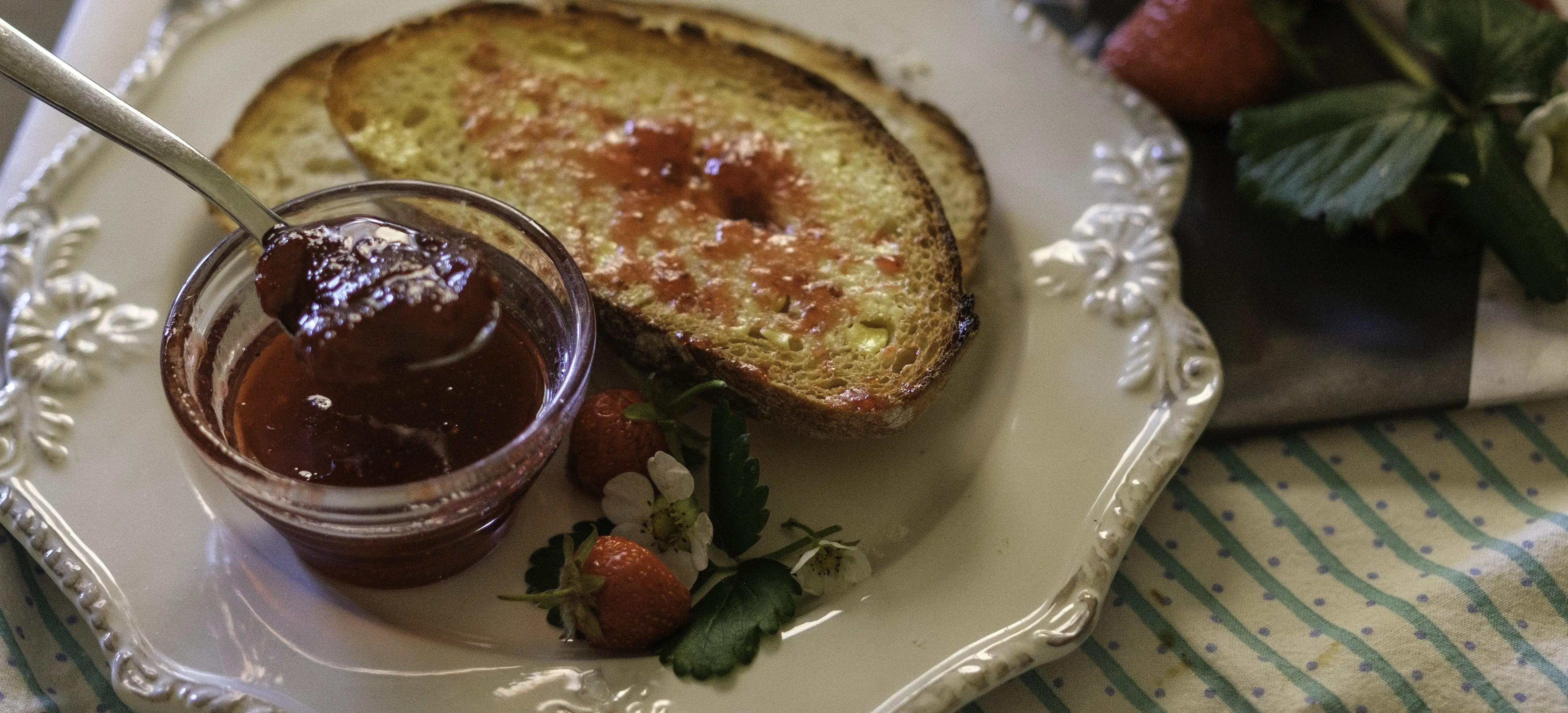
Sweet, sumptuous strawberries, mixed with a hint of rhubarb tang and a heady scent of rose creates an ambrosial jam that’s irresistible. Perfect for breakfast, afternoon snacks and dessert, once the lid is opened it will disappear quickly. The proportion of strawberries and rhubarb can be changed to create your own signature preserve. Make the most of the strawberry season and stock the pantry with a summer treat that can used throughout the year.
- Preparation Time:
- 30 minutes
- Cooking Time:
- 30 minutes
- Quantity:
- 6 x 200 ml jars
PREPARATION
Sterilise glass jars and lids with a protective lining. Have the jars and lids dry, hot and ready for the bottling stage. Refer to my article How to Sterilise Jars and Bottles for a range of easy sterilising methods.
Warm the sugar. Refer Notes Section: To Warm Sugar for more information if required.
INGREDIENTS
- 850g
- Strawberries prepared as below
- 150g
- Rhubarb, red
- 150 ml
- Water
- 1
- Lemon juice
- 600g
- White suagr
- 1 1/2 teaspoons
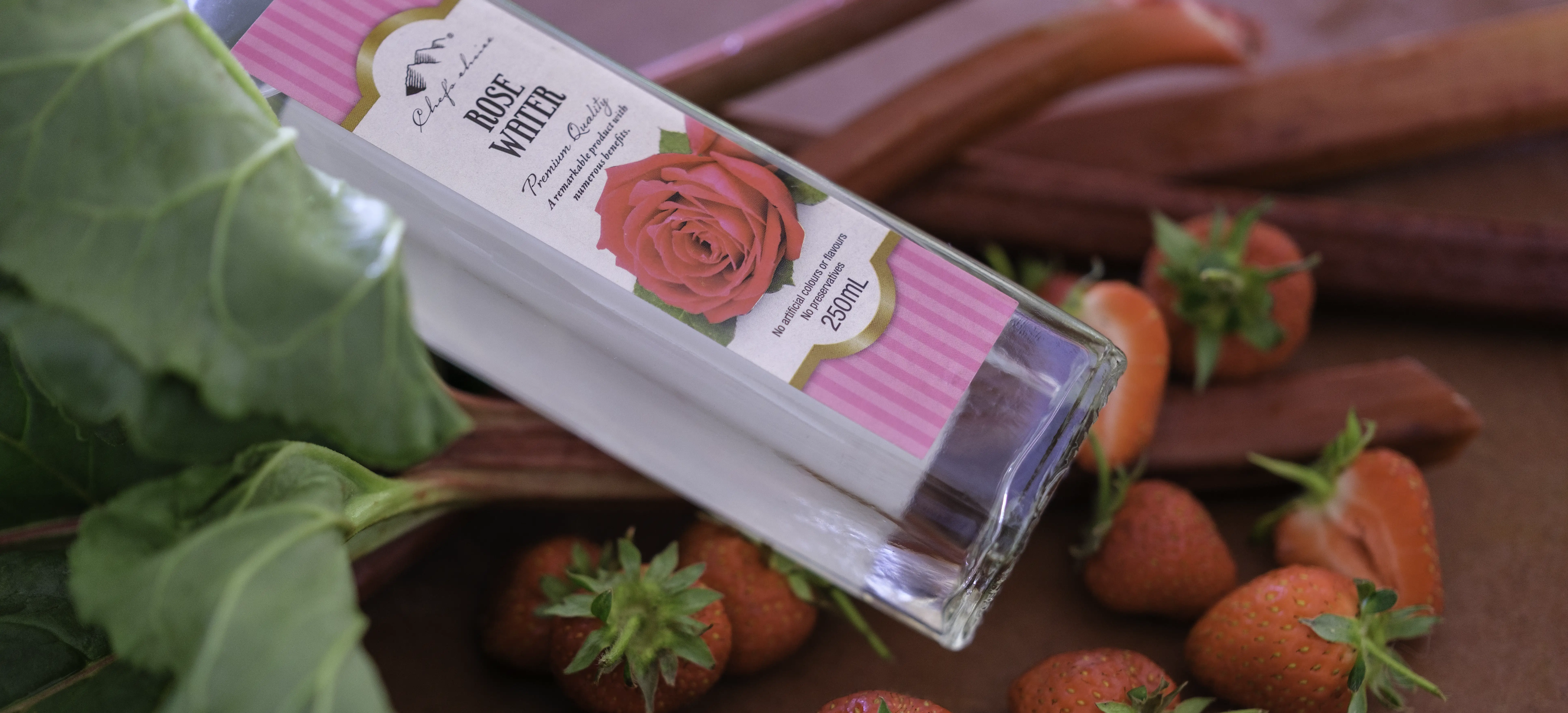
- Rose water
- 2 teaspoons
- Orange Liqueur, optional
METHOD
Wash the strawberries, rhubarb and lemon to remove any dirt or unwanted residues and garden debris. Then remove the excess moisture by gently patting with clean dry paper towel, a tea towel or allow them to rest on them.
Remove the green top (calyx) from the top of the strawberry. Some recipe books refer to this technique as “hulling”. Using a small paring knife, remove any bruised, mouldy or damaged parts of the fruit. Cut any large strawberries into small chunks.
Trim rhubarb to remove leaves and the harvested end. Discard. Cut stems into 5ml (1/3 inch) lengths. The rhubarb will break down and combine with the strawberries to create a rich red pool of deliciousness.
Cut lemon in half, remove any seeds and juice.
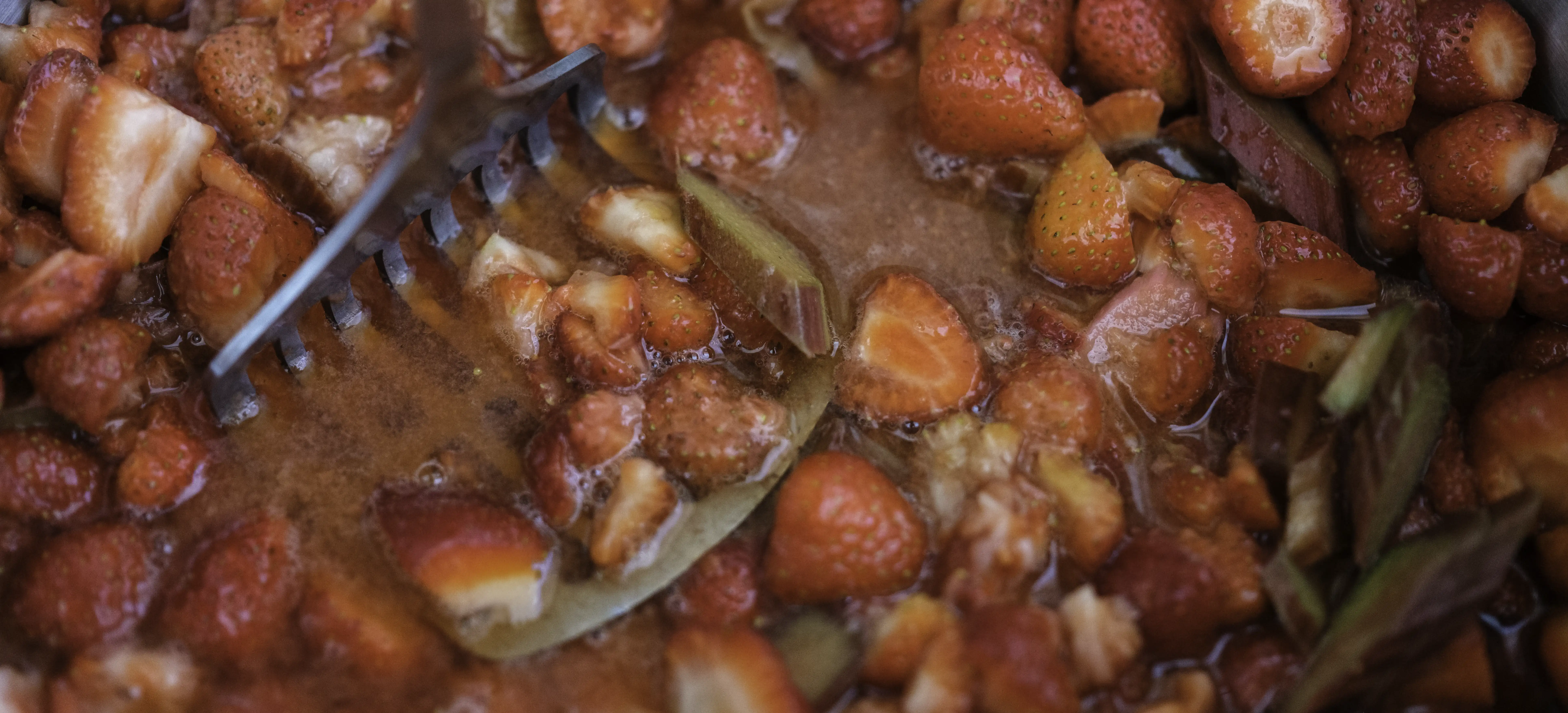
Place the prepared fruit, water and lemon juice into a stainless-steel preserving pan or heavy-bottom stainless-steel pot. Using a potato masher, break up the strawberries. Simmer gently until the fruit is soft and broken down.
Add the warmed sugar, stir until all the sugar has dissolved.
Place on the heat and bring to a simmer, stirring constantly. Only once the sugar has dissolved, bring to the boil and boil rapidly until the setting point is reached. .
When the jam has reached the setting point, remove it from the heat and place on a heat-resistant board. Add the orange liqueur if using and stir in. Using a sharp-edged spoon or ladle, remove the scum that accumulates around the edge of the pot as it builds up. Allow to rest for 5 minutes. If bottled immediately it’s likely the fruit pieces will rise from the bottom of the jar.
Using a wide-necked funnel, ladle into warm sterilised jars to within 2.5 cm (1 inch) from the top, distributing the fruit evenly between the jars.
Seal immediately with hot dry lids. The HHH method of HOT dry jars, HOT dry lids and HOT jam creates a vacuum seal as it cools. The “popping” sound, often heard in the kitchen, signals a successfully vacuum sealed jar.
If there are no lids, seal with paraffin wax while the jam is hot. Cover with cellulose or plastic film and secure with a rubber band or kitchen twine. Note this is not a safe long term storage method. Refer to the Notes Section: Sealing with Paraffin Wax below for more detailed instructions. The HHH method of sealing is preferred as there is reduced risk of contamination prior to sealing.
Allow the jars to cool, wipe down to remove any spillage and label. Store in a cool dark place in the kitchen or pantry.
Allow the jam to mature for at least 2 weeks before eating.
NOTES
- Choose ripe but not over ripe or mushy fruit and never use mouldy produce as this produces a poor-quality jam.
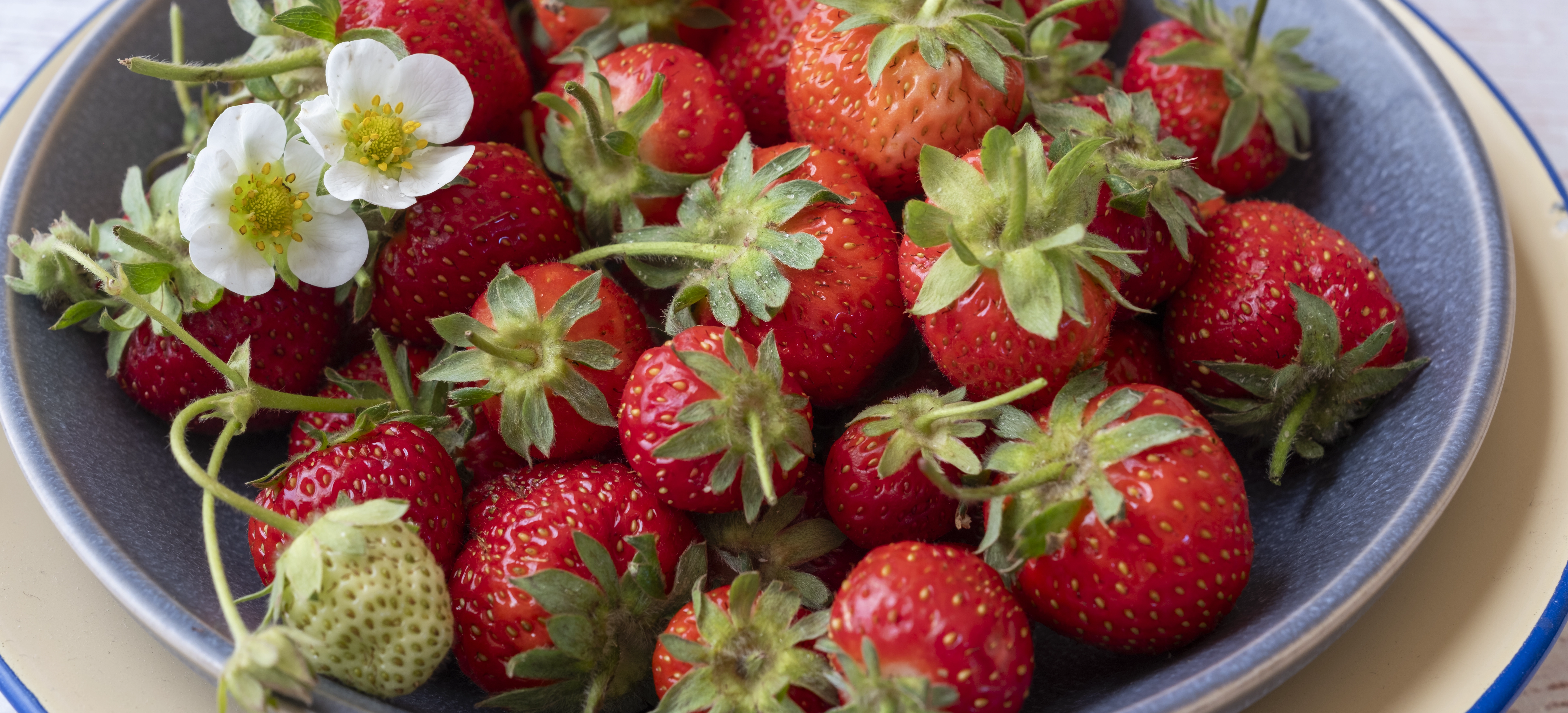
- Select ripe, firm strawberries. Harvested fresh from the garden, or at a Pick-Your-Own farm or purchased from a farmers’ market will provide a more flavourful and aromatic jam. Supermarket strawberries just aren’t the same. If possible, use the dark red rhubarb variety as it gives a more intense red colour.
- The proportion of strawberry and rhubarb can be changed, providing the total fruit weight remains the same for the specified amount of sugar. I recommend a higher proportion of strawberries to get the right jammy consistency.
- Soft Set Jam
- This will be a soft set jam as strawberries and rhubarb are low in acid and pectin and require the addition of citric acid to help make them set. Lemon juice has been used in this recipe. Lemon and lime juice are amongst the richest sources.
- If for some reason, the jam has difficulty in setting, add more lemon juice. If it doesn’t set don’t discard it. It will make a delicious sauce to accompany cake, dessert or spooned lovingly over ice-cream.
- Preserving Pan
- If you do not have a preserving pan, use a large heavy bottom pot, preferably stainless steel.
- This will distribute the heat evenly across the pot and the jam while it is cooking. Ensure there is enough space available in the pot for the mixture to double in size while it is rapidly boiling.
- How to Warm Sugar
- To warm the sugar put the recipe quantity in an oven proof container and place in a preheated 150 degrees C oven for approximately 10 minutes. The sugar should be warm throughout the bowl.
- After the sugar has been added to the hot fruit mixture, ensure the sugar has completely dissolved before boiling, otherwise the sugar may crystallise later in the jar.
- Warmed sugar dissolves quickly and then a rapid boil until the setting point is reached, helps to preserve the fresh fruit flavour.
- Long slow simmering of jam affects the colour and reduces its flavour.
- Preserving Jars
- Good quality jars should be used in all preserving, particularly when they are processed in a hot water bath. Thin jars often cannot withstand the temperatures and may crack either in the bath or on and or after removal.
- Avoid the disappointment and invest in some good jars from a homewares or preserves outlet.
- Cooking Times
- Cooking times are an approximation only.
- They are provided as a guideline as cooking times are influenced by the type of pot and its diameter and height, speed of cooking and fruit ripeness, size, and moisture level.
- Removing the Scum
- Jam, jellies, and marmalades can produce a scum while they are boiling. Impurities from the fruit and sugar will rise to the surface and a fine frothy foam will move towards the edge of the preserving pan. Some fruit will produce more scum than others.
- This is a natural self-clarification process and makes the task of making a high-quality preserve easier. Removing the scum increases the preserve’s clarity. This is very important if it is being submitted for competition.
- Remove the scum before bottling. Using a stainless-steel spoon, skim the scum from around the edge of the preserving pan. Be careful to remove just the scum and not the jam. This can be done while the jam is boiling and/or once it has been taken off the heat.
- Do not attempt to remove the scum from the centre of the boiling jam, as there is an elevated risk the jam will splutter and hot jam burns.
- Sealing Paraffin Wax
- Paraffin wax is available in speciality preserving stores and some rural hardware stores. The melted wax must be poured over the preserve while both are hot.
- Break the wax into small pieces and heat in a bowl set over a pan of hot water. Bring the water to the boil, reduce the heat to maintain a gentle simmer until the wax is just melted.
- Do not overheat. If it gets too hot it will shrink away from the sides of the preserving jar as it cools. This will break the seal and allow impurities to access the contents, encouraging mould growth.
- Working quickly, pour a thin layer over the hot preserve. Using a small wooden cocktail stick, toothpick, or cake skewer, prick any air bubbles.
- Allow the wax to set. Then pour a second thin layer to make a seal approximately 3mm thick.
- When the wax has set it will become opaque and dip slightly in the middle.
- Cover the jar with a cellophane disc and secure with a rubber band/kitchen twine.
- To use the preserve, break the wax seal and remove. Discard or wash thoroughly, dry and re-use later as required.
- Sealing with wax is not a longer-term storage solution. Use within a couple of months. Once opened store in the fridge.
- Did You Know?
- Botanically rhubarb is actually a vegetable and not a fruit.
- In Europe it cost more than opium and in France (in 1542) it sold for ten times the price of cinnamon and four times that of saffron.
- By the 18th century, it was used so extensively throughout England and America, particularly as an inexpensive filler, that colloquially it was known as the “pie plant’. Learn more about rhubarb’s Renaissancel
- Some interesting fun facts about the ubiquitous strawberry.
- It’s called a berry, but it’s not a berry at all. It has a unique form. The seeds are on the outside! The average strawberry has 200 seeds. Obviously not an appropriate food choice for diverticulitis sufferers. Learn more about the humble strawberry